No products in the cart.
No products in the cart.

$1,125.00

img{max-width:100%}
|

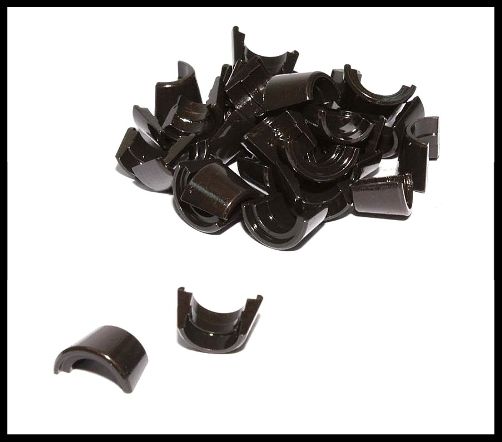
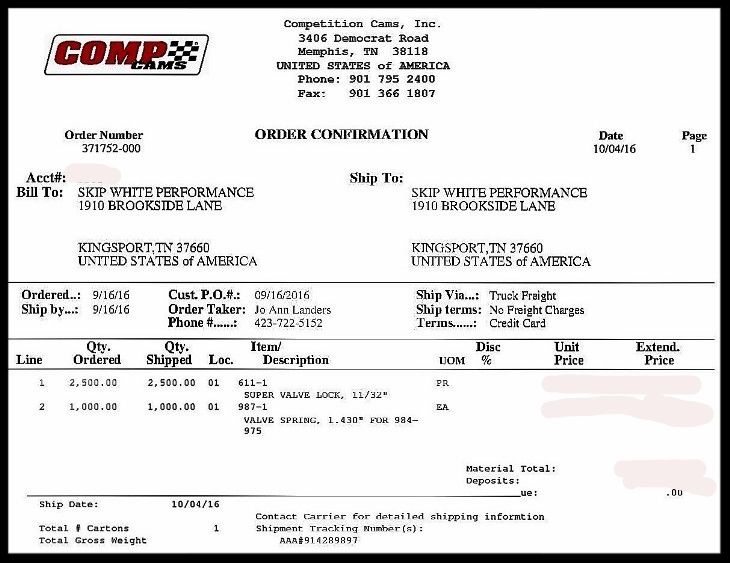
Comp 10 degree machined valve locks.
We use only Comp Super 10 degree machined locks. Our head builder noticed the low grade locks on the market fit more loosely than he felt they should, not to mention the possibility that they were made of inferior metal. He envisioned the engine being much more prone to dropping a valve at high rpm. Using these locks, we have yet to have an engine drop a valve due to a valve lock failure.
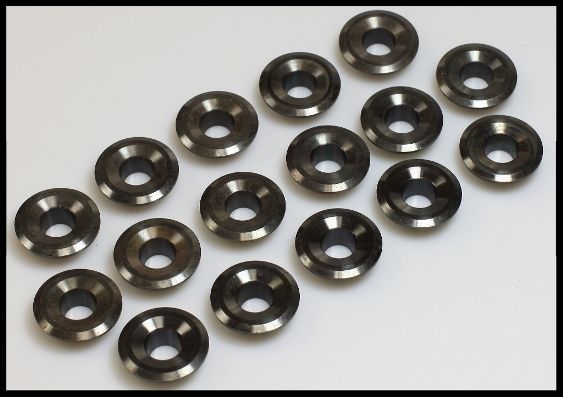
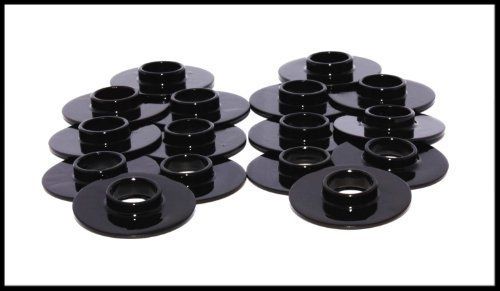
Comp Cams retainers # 75741-16 and Comp Cams
Our Comp Cams retainers # 75741-16 are made from 4130 chromoly steel. These retainers have a perfect fit with the Comp valve locks. We have used these on all of our engines for many years, and have had zero failures.
Assembly Procedure
We hone all of the bronze valve guides with a ball berry flex hone to establish not only perfect clearance, but also a semi cross hatch finish for oil retention. We finish off with a natural bristle brush. The heads are then placed in our parts washer and cleaned with high pressure hot water, then pressure dried. Before installing the valves, we apply a heavy coat of engine assembly lube to the valve stems. The coating on the valve stems is essential to protect the bronze guides from gaulding on initial startup.
Our next step is to set the spring pressure to a predetermined pressure using a spring height checking device, most suitable for street rod use. The springs we are using allow for a near perfect seat to nose ratio. Be warned that some sellers of aftermarket heads may not be checking the installed height when assembling the heads, and may not be setting them up to the correct pressures. We have a full scale machine shop with several very knowledgeable engine builders that know and fully understand how to properly assemble a set of heads. Combine the possibility of poor assembly methods with incorrect or low grade hardware, and it is easy to see how failures can result.


IMPORTANT NOTE CONCERNING ROCKER ARM STUDS.
If you have been a regular shopper with us, you will have noticed we do offer some knock-off products that are made off-shore. We do also sell many products made in the USA. We have always been very particular as to the quality and workmanship of such products, while considering the cost. We scrutinize our products very carefully and refuse to sell products that simply don’t meet our standards. We have now eliminated another of the low cost knock-off products from our line. The low cost imported rocker arm studs have shown numerous problems unlike those in the past. We have looked at several others on the market, and still find many issues with them that are not acceptable.
Many of the studs had run-out in the shaft of up to an eighth of an inch. This caused major problems with rocker alignment, and depending where the position was when the stud tightened up, would determine the direction of the rocker misalignment. If the warped stud was facing toward or opposite the valve, then the roller tip would would not be centered to the valve tip. This would then create a loss of lift and cause increased wear on the valve tip.
If the warped stud tightened up in a side to side position, then this would allow the rocker tip to be cocked on the valve tip. This would then side load the valve tip with undue pressure, creating a serious wear problem on the side of the valve tip and create excessive wear on the valve guides in the heads. This also side loaded the rocker trunnion and front roller, creating an excessive wear issue in the roller rockers.
We also found a difference in the tread pitch and depth compared to the ARP studs. The rocker studs in an engine are under a tremendous upwards pull and improper thread design may cause the studs to pull out of the head. The ARP studs screw into the heads with a very precise fit and feel.
After thoroughly comparing the ARP studs and several off shore models, I am convinced that we will never offer the off shore studs again, regardless of the price difference. They were never as bad in the past as what we’re seeing now. This run-out was most likely caused by improper heat treating methods.
We are aware of only one other rocker arm stud besides ARP on the market of decent quality, and that’s from the GM Performance division, and it’s fair to say they are most likely supplied to GM by ARP under private label.
We have rejected many products that are outright junk and would cause serious issues in your engine only to see other sellers offering those same exact products. It’s all about learning where to draw the line.
Studs and guide plates are NOT included. Other sellers may include these items but rest assured, they are usually not suitable for these heads. We use nothing but the Dart adjustable guide plates and ARP rocker studs when we build an engine using these heads, as they allow for perfect alignment of your rockers. See our other listings for a full selection of accessories.
See our other listings for valve train related items that you may need for your project. The part number for the correct studs and our Dart guide plates to be used with these heads is 38-GP for those running 3/8’s size roller rockers, and for those with 7/16’s roller rockers the part number is 716-GP These kits are available in our other listings.
We are glad to offer many great low cost items, as well as the high end products, but will always give careful consideration to quality, functionality, and overall value..
Our cylinder heads are made from AC4B alloy and tempered to T6 standards. You may have heard the alloys 355 and 356 being used on many heads. The alloy used on our heads is similar but slightly different. The AC4B alloy is commonly used by automakers in Europe and Japan. Take notice of the Rm value. This value indicates the tensile strength of an alloy. As you can see, it’s higher than all the other common alloys in this chart. It’s no surprise as to why we have never experienced a failure of any kind with these heads. Zero failures in the casting, zero failures in the seats and guides. We have sold over 5000 pair of these heads over the past four years.
| |||||||||||||||||||||||||||||||||||||||||||||||||||
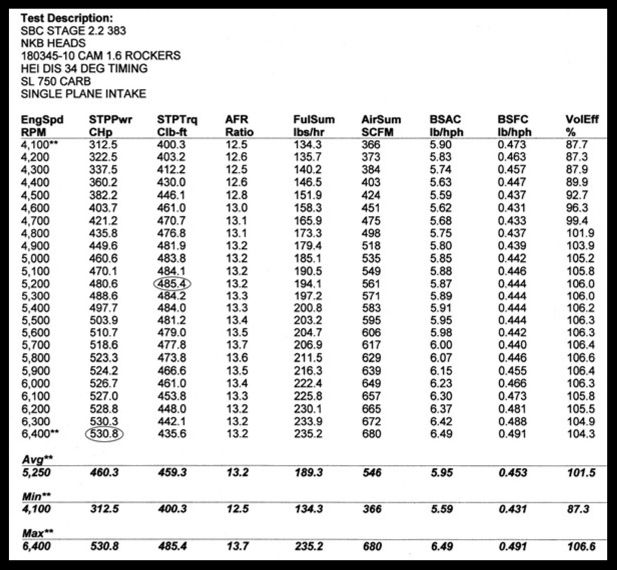
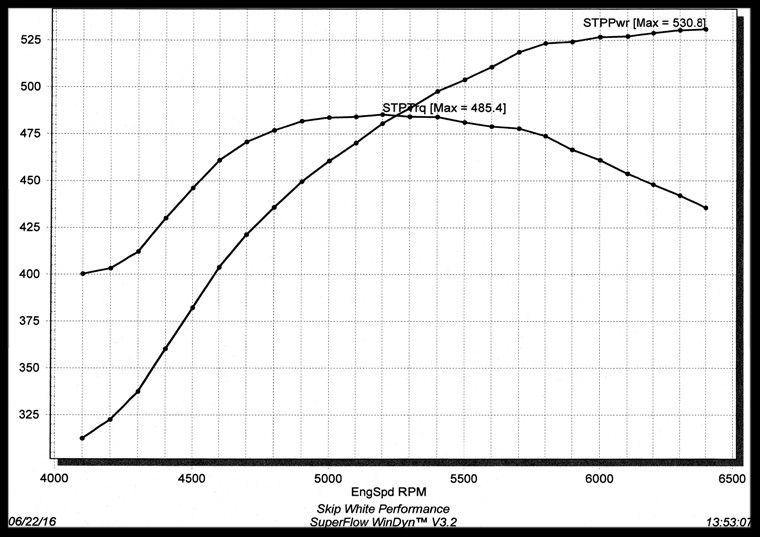
The results produced by these heads will vary greatly depending on the type of setup you are running. The engine combos we have dynoed are what most people use for cam and intake selection, and the results are listed below. The engines dynoed were many 383’s, and several 406 cid engines in the 10:1 to 11.2:1 compression range. All ran on pump gas. Our Stage 2.2 383 engine ad has a selection of four different cams. I have copied this info from that ad. This will give you an idea about the capabilities of these heads with combinations of cam, intake, rockers, and carb. This may also help you select the proper cam for your build.
As mentioned, below is just an excerpt from our Stage 2.2 engine ad. We also built and dynoed a 350 engine recently with the new NKB-200 heads for a customer, and will have the actual dyno results in this ad soon. The cams mentioned below are all hyd. roller cams. If you’re using a lower lift than those listed below, then it would be fair to say the hp will drop, but not by much, providing your lift and duration are somewhat close to any of the cams mentioned below. This will give you an idea of what kind of power to expect with these heads, and it can certainly help you choose a cam and intake.
Official Dyno report on our 406 engine with this cam, flat top pistons, and a single plane intake.

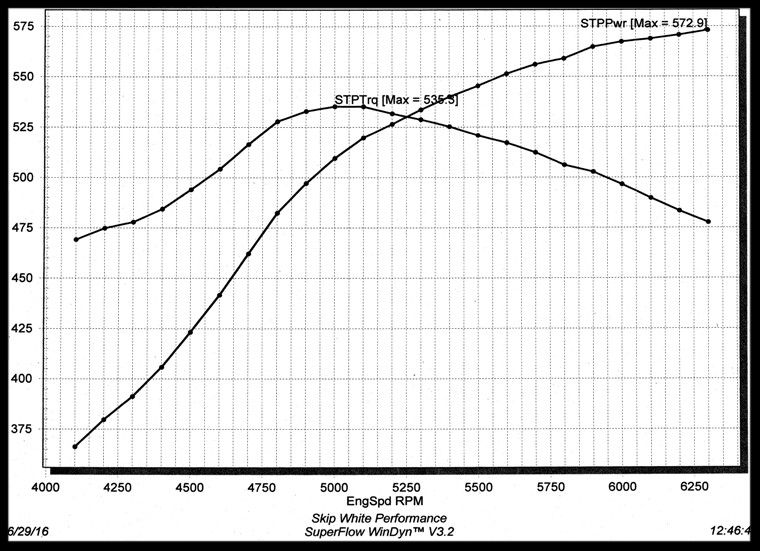
Official Dyno report on our 383 engine with this cam and a single plane intake.
This is a hyd. roller cam for use in OE roller blocks.
Valve lift with 1.5 Rockers: Intake .530/Exhaust .545
Duration @.050″: Intake .233/Exhaust .241
Lobe sep. angle: 110º
Recommended springs #: 274, See our other listings.
This cam choice (3) is the perfect all around setup for those wanting a decent bottom and mid range, while still generating excellent power at the top in a 383 engine. This engine will use the same pistons as the cam choice above, but you could have a bit less compression ratio and that would be fine. This cam will make its peak power at approx. 5700 rpm. If your car is in the medium weight range or up to approx. 3,700 lbs, and you’re wanting slightly better streetability, then this is a good cam choice. You still want to keep the final gear ratio at .323 or higher, but keeping the gear ratio on the tall side is more acceptable with this cam compared to the other choices mentioned above. You may choose 1.5 or 1.6 rockers with this cam, but we recommend the 1.5 rockers for better low end response.
This cam should be paired up with the dual plane Crosswind intake for excellent daily drivability. The single plane Hurricane can be used, but the dual plane will have much better bottom end and mid range response. You can also expect a longer valve train life with this cam compared to the larger cam choices # 1 or 2.
Official Dyno report on our 406 and 383 engines with the cam mentioned above. The 406 engine had a dual plane intake, yet still achieved over 500 hp with the NKB heads.
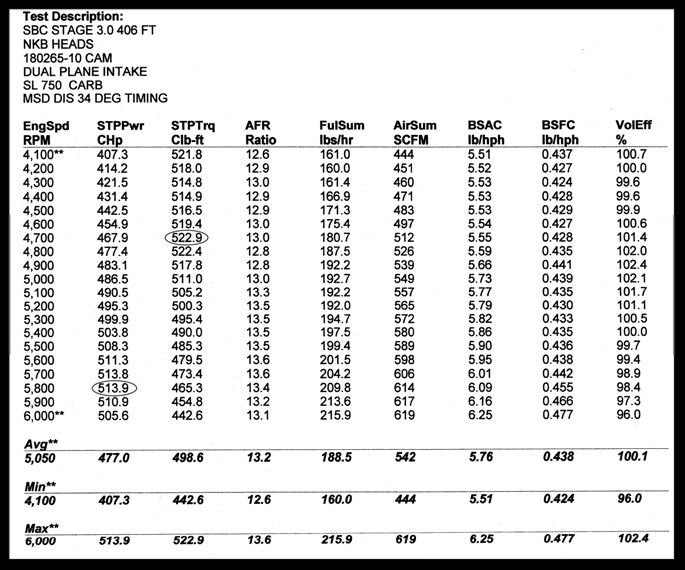
Cam choice #2 and a dual plane intake.

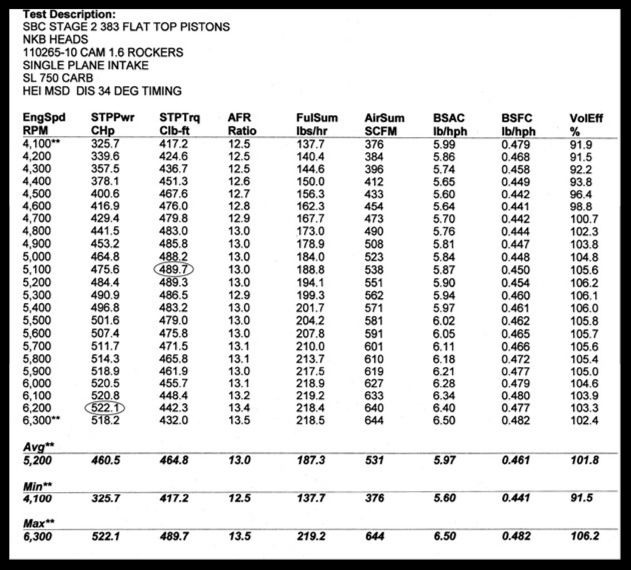
This cam and a single plane intake.

This is a roller cam for use in OE roller blocks.
Valve lift with 1.5 Rockers: Intake .500/Exhaust .510
Duration @.050″: Intake .225/Exhaust .231
Lobe sep. angle: 110º
Recommended springs #: 274, See our other listings.
This cam choice (4) has a slightly lower lift and duration than the others offered above, and is highly recommended for use in heavy vehicles like full size sport trucks or very heavy cars. The low end response with this cam is very good. Compression ratio in a 383 could be as low as approx. 9.5:1 with this cam. Slightly higher would be recommended in a 350 build.
The rule of thumb with cam size is that the smaller the cam in a given application, the more improvement in low end response. One more benefit to the smaller cam is that the requirements for lower gearing and higher rpm stall converters is reduced. A final gear ratio of 310 would be acceptable with this cam. The bottom end power would be much better with this cam than with the other choices above. This would be the only choice for those wanting to run an overdrive transmission such as the 700R4 and cruising at around 2000 rpm in overdrive. A stall converter of 2,200 would be the minimum for this cam.
Valve train life is extended greatly with this cam as compared to the other choices listed above, drivability is at its best. Low and mid throttle response is very strong. This cam choice will also produce the greatest amount of vacuum at idle compared to those listed above.
Official Dyno report on our 383 engine with our NKB heads and a single plane intake.

This cam and a single plane intake.

THE CAMS LISTED WILL COVER MOST NEEDS FOR ANY STREET ROD.
An excerpt from our engine ad about our new dyno.
As of 9/15/2013 we completed installation of our brand new Super Flow 902S dyno. In the past, we outsourced our dyno work. We were unable to do the research and development we truly wanted, and this prompted us to make the $105,000 investment. It’s been one of the best investments we have ever made. Every aspect of our engines can now be monitored, calibrated, and tuned. Best of all, we can now see what combos generate the best power, with consideration to drivability.
Update, as of 3/1/16 we have installed our second new Superflo dyno. After the new dyno was setup, Superflo sent out two factory techs to calibrate it, and install the software. We made a comparison between the two dynos with one of our engines, and found them to be within one horsepower of each other.
VERY IMPORTANT-Head bolt recommendation.
The NKB and our AFR sbc heads require the use of ARP 134-3601 Head bolts only. They are far superior to virtually any of the other common head bolts on the market. They have specially designed extra thick head bolt washers, and extended reach head bolts. Using stock length head bolts will not allow the use of the extra thick special washers required, as the OE bolts have a limited amount of thread on them. Not using the ARP head bolts may cause serious damage due to the fact they will gouge into the aluminum surface of the head and not only can this cause a possible break-through into the runner section of the head, especially in the center cylinders, the torque readings are often very inaccurate due to the drag created as the bolt head gouges into the aluminum surface. There are many other critical reasons not to use stock or most any of the other off brand head bolts with these heads, too many to mention, but rest assured the problems associated with can be very damaging. We will soon be doing to video to demonstrate the reasons and importance of using the ARP head bolts recommended in this ad. We do offer the correct AFR head bolts in our other listings.
Guide plate recommendation.
We strongly recommend the use of the AFR two pc. adjustable jig saw puzzle style guide plates with these heads The two pc. adj. guide plates will allow better rocker tip alignment due to the fact they are highly adjustable. We use them on every set of heads we install on our engines. The two pc. adjustable guide plates allow a great amount of correction for proper alignment of the roller tip on the valve tip. By having proper rocker tip alignment, you are distributing the pressure on the valve tip evenly. This not only reduces uneven valve tip wear, but also prevents undue stress on the valve guides in the heads. See our other listings for the AFR two pc. adjustable guide plates.
Pushrod recommendation.
We recommend not using stock GM pushrods with these
heads. The spring pressures on aftermarket heads are somewhat higher than on OE
heads. Combine this with the larger lift and duration cams often used, and
stock pushrods may flex or permanently bend. The stock pushrods are usually
made from a mild 1810 steel that has been heat treated. Under high rpm they
will usually flex and cause a loss of lift resulting in a power loss. The
engine will usually run erratically when pushrods are flexing. The Spintron
valve train dyno proves that inadequate pushrods will flex to a great degree as
engine rpm increases.
Some GM pushrods have a welded ball on them, and they stand a
greater chance of breaking off with the use of larger than stock
cams, and increased spring pressure. We offer pushrods made from 4310 chromoly with an .080 wall thickness. They are superior to any stock pushrod. Our prices
on them are the best you will find.
The size that you will
most likely need with the NKB heads will be 7.250. This
size has worked well for us when using the Comp high energy or Scorpion brand rockers. There
are many low cost pushrods on the market in the $29-$39 range. These low
cost pushrods are totally unsuitable for use with these heads for the many
reasons mentioned above, and they are not guide plate compatible. They usually
have a wall thickness of only .065. These pushrods will cause problems when
used on a high performance setup. There are many factors that can
determine pushrod length requirements. The 7.250 length
is the most applicable. Should you purchase a set of pushrods from us and find
that the length is not suitable, you may return them, and we will send out the
size you request.
Roller Rocker Recommendation
COMP Cams Ultra Gold ARC Aluminum Rocker Arms, Not Included.
Designed specifically for high performance street and race engines, COMP Cams Ultra Gold ARC Series aluminum rocker arms are precision CNC-machined to strict tolerances. They incorporate modern technology and design features to create the most advanced aluminum rocker arms available. Proven to withstand extremely aggressive spring pressure, the COMP Cams Ultra Gold ARC Series aluminum rocker arms use their CNC-machined aluminum design for high quality and the ultimate in ratio accuracy. The weight reduction on these as compared to any of the other roller rockers on the market is huge. The Comp Ultra Gold rockers are 12 grams lighter than Scorpion and much more so on most all the low grade rockers on the market. This weight reduction is very valuable in preventing valve float at peak rpm levels. Rest assured most street rod engines are hitting close to or above 6000 rpm, and this is approaching the valve train limits on most all sbc and especially bbc engines. The light weight design of the Ultra Gold rockers can make a substantial difference in the fight against valve float. As you may know valve float to any degree can cause catastrophic engine damage. Worry not about the light weight design of these rockers as they are manufactured from pure aircraft aluminum alloy and have a lifetime warranty. They are also able to safely withstand up to 700 lbs of spring pressure. That is nowhere close to the spring pressure you would have with any hyd. flat tappet or hyd. roller cam.


Important notice.
If you’ve read our warning on engine builders using low grade no-name rods and cranks, a very similar situation exists in the roller rocker market. We do not use or sell off-shore, (no-name) roller rockers, period. They have proven to be faulty in many ways. The center trunnions are not polished, nor is the center of the roller tip true to size or polished. Metal fragments are often left inside the trunnion housing and will cause destruction of the needle bearings. The aluminum alloys used are never aircraft aluminum alloys as are used in all USA made roller rockers. They often mention the alloy as being 6061, and that is a very soft form of aluminum. The 6061 alloy used on these will assure rocker-flex on any higher than stock spring pressures, and this will affect performance to a great extent. The pins and keepers that hold the parts together are often of poor quality and improperly installed. The front roller will usually scoot along the valve tip, as it can’t roll properly due to rough internal surfaces.
We have honestly seen valve tips that were scalloped out due to the front roller dragging across them. This will cause the valves to side-load against the valve guides in the heads and surely cause damage to them if run like this for very long.
We have scrutinized these products in the past and found all of the above problems, and I can tell you there are most likely many more. We would not use them in an engine under any circumstances. You will also see many of these rockers made from stainless on the market. They use a very low grade stainless that actually has a near non-existent amount of nickel in them, but that’s not the real problem with them, as stainless steel has no advantage over aircraft aluminum alloy or high grade heat treated steel when it comes to a roller rocker. The lack of hardness of the rocker body is the real problem. The problems with these stainless rockers are the same as mentioned above. These are the roller rockers you see on the market for around $159 and up to $189 for the so called stainless ones. They are pure junk, in our honest opinion. They could possibly be used on a budget back yard stock build up that has a very low spring pressure, with a cam that has very low lift, but then you would be better off with the stock stamped rockers on such a build.
We have heard of many engines using these rockers that came apart and spilled needle bearings into the engine, only to end up in the oil pump. It seems like some engine builders do not care how long the parts in your engine last, or they simply don’t know this. Rest assured that using such low grade, “no-name” roller rockers is asking for trouble.
We use Comp Ultra Pro Magnum, and Comp Ultra Gold Arc rockers in all of our engines. The difference in these compared to the low grade no-name rockers on the market is huge. Do a Google search on this subject and you will know then what we’re talking about.
Skip White
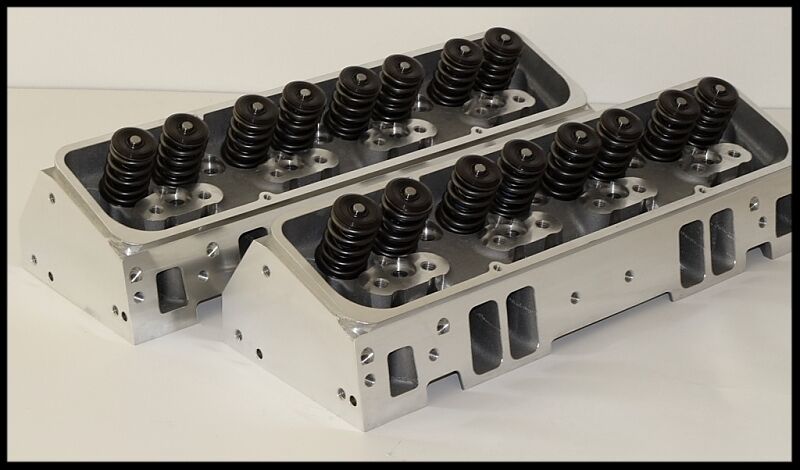
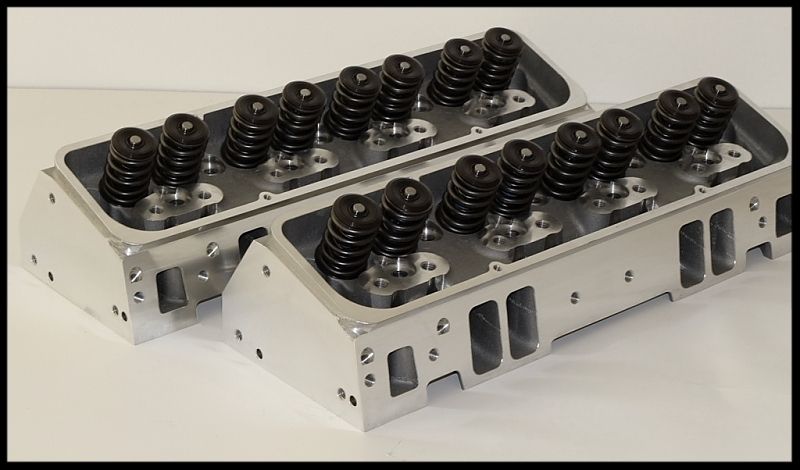
NKB-200 64cc 200cc RUNNER
SIZE STRAIGHT PLUG FOR SBC CHEVY ENGINES
Intake Valve
Dia: 2.02”
Intake Port volume:
200cc
Intake Port Dim: 2.2” x 1.2”
Int Port Location: Stock
Intake Gasket: Felpro# 1206 fits perfectly with most intakes. Should your intake drop too low, then the
1266 gaskets will correct this problem. Our line of intakes has worked
very well with the Felpro 1206 intake gaskets.
Head Gasket:
Felpro#
1003 or our line of GR-30 and GR-40 heads gaskets.
Exh Valve
Dia.: 1.600”
Exh Port volume: 70cc
Exhaust Port Dim: 1.356”
x 1.420” w
Exh Port Location: Stock
location & bolt pattern
Exhaust Gasket:
Depends on
what type exhaust you’re using. Best to try and match up the gasket to your
header or manifold
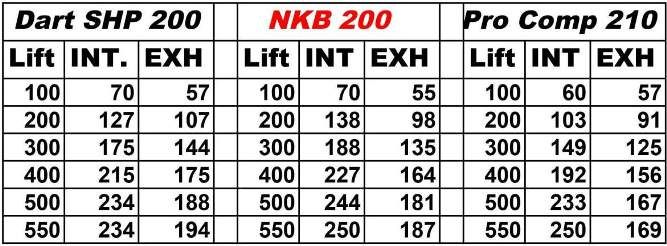
Flow, Intake:
See chart above.
Flow, Exhaust:
See chart
above.
Head Bolts: You must use the ARP # 134-3601 head bolts. Do not use
oe, (stock) head bolts.
Head
Studs: PC-2451-Studs (12pt)
or ARP brand.
Manifold:
Most any. Our line of intakes fit very well on the NKB heads.
Milling: Min.
Down to 58.5 cc or 64.5 = .060” See info in this listing for details on
this.
Pistons: Most
23°aftermarket pistons.
Push Rod length:
When running a solid roller cam use a pushrod length measuring device. See our other listings for the best deal on
premium pushrods.
Push rod Guide Plate:
We strongly recommend Dart flat guide plates.
See our other listings for these.
Retainers/Locks:
Chromoly Steel
Retainers, with 10° Comp brand machined locks are used on all of our
heads.
Spark Plug:
Straight, .750” reach, gasket, CHAMPION RC12YC or
NGK 4554 premium plugs.
Spring
Pockets: 1.600” OD (.030” deeper max)
Springs: AFR 1.550 outer diameter. Dual springs with an internal damper.
Valve
Length: (+.200”)
for solid. roller cams
Valve Stem
Dia: .3415” – 11/32”
Valve
Train: STD SBC 3/8” or 7/16” stud mount
Valve
Guides: ½” OD Int =
Mag-bronze Exh = Phos-bronze (.002” press)
Valve Guide
length: 1.950”
Valve Guide
clearance: .0014” – .002” (with
our .3415 dia. valve stem)
Valve Guide Spacing: 1.890” moved
.030” from stock
Valve
Seats: Hardened
Ductile Iron, .006” press
Valve Seat
dim.
Standard
Valve Seat
angles: Int
= 32° – 45° – 60° – 70° Exh
= 37° – 45° –
radius
Stud
Girdle: Use
any standard girdle. Our Gold Series Stud Girdles work very well on these heads.
Torque: Head
Bolts = 65 ft/lb
Rocker
Studs = 55 ft/lb
Manifold
= 30 ft/lb
Block
Use: Any SBC Iron
or Aluminum
Weight:
58-60 lbs fully assembled pair
|
A final note…Skip White Performance…About Us
I’m sure many of you have noticed there are 2 high performance engine builders in Kingsport, TN with similar names, leading to a great amount of confusion.
We are Skip White Performance, NOT White Performance and Machine.
Due to the name similarity, many customers looking for us online inadvertently find them, thinking we are the same company. Definitely not…there is no connection between the two companies. We don’t have a problem with free enterprise (competition). However, when the competition builds their foundation on such things as a name similarity and their supposedly long history of being in business, then we think it’s about time we set the record straight.
We have owned White Performance since 2003, with the exception of the machine shop, which was owned by Fred White at the time. He continued to operate the machine shop and build engines for us while we continued selling online under the eBay user ID of skipwhite and the eBay store name of whiteperformance1.
Due to their limited production capability and many disagreements about the engine and head building process as well as workmanship, we opted to open a full scale machine shop of our own a few years later. Fred White began competing against us even though our contract had a non-compete clause in it.
As our business grew, we opened a second, much larger warehouse and machine shop around 2011, located on Brookside Ln. in Kingsport TN. By putting heart and soul in this company, we have become the number one street rod engine builder in the nation.
Fred sold his shop to an investor in 2016 and the new owners continue to reap the benefits from this confusion between the two shops. This investor lacked any knowledge of this industry. They continue to use the White Performance & Machine name. Contrary to what is posted on their website, Fred White is no longer associated with the company in any way. Their main spiel in advertising is, “In business since 1979,” when in fact, we purchased the White Performance company in 2003, with the exception of the machine shop.
All in all, we have been in this business going on 17+ years. Skip White’s passion has been owning and building street rods for 47 years on a personal level. The knowledge he has gained over time has allowed him to venture into this business and succeed to a very high level.
The great pretenders continue capitalizing on our success due to the name similarity, but have been degrading our reputation. We have been getting calls nearly on a daily basis from people that now realize there are two shops in this town with very similar names. Customers complain of serious problems in getting their orders in a timely manner from them. They think they purchased their cylinder heads from us. Due to the confusion, there is an increasing amount of negative feedback that is affecting our name within the street rod community, when in fact we have a near perfect reputation in this industry. We have an “A+” rating with the Better Business Bureau and we have maintained the A+ rating for many years.
FAST FORWARD TO PRESENT DAY…We have become the largest street rod engine builder in the nation. Our engines, rotating assemblies, and cylinder heads are built to very high standards and shipped to our customers in a timely manner. We are a premier seller on eBay with a positive feedback score of well over 206,000 and growing, as compared to our competitor’s score of approximately 24,000.
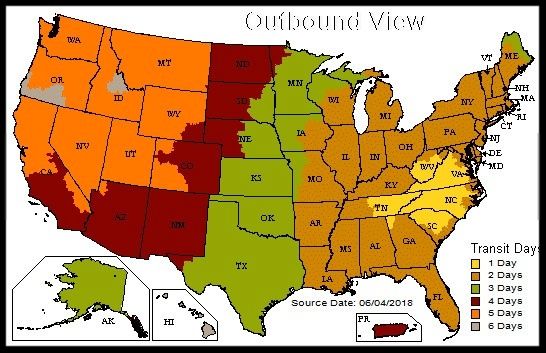
Our engines are custom-built to our customers’ specifications and are shipped in approx. 2-5 weeks, perhaps sooner, depending on the season. Our rotating assemblies usually ship out in about one week or less, and our heads ship in about a week or less.
|
|
| Brand | NEW KID ON THE BLOCK 200 |
|---|---|
| Other Part Number | SETUP FOR SOLID ROLLER CAMS |
| Interchange Part Number | NKB-68CC-8000 |
| Part Brand | NKB |
| Manufacturer Part Number | NKB-68cc-ST-SR |
| Finish | ALUMINUM |
Only logged in customers who have purchased this product may leave a review.




Reviews
There are no reviews yet.